
Stormwater
Stormwater is water from rain, snow, and ice melt. Instead of soaking into the soil, it often runs off hard surfaces like roofs, driveways, and streets, entering storm drains or ditches instead of soaking into the ground.
Proper stormwater management is crucial to prevent flooding, property damage, and pollution of local waterways. By managing stormwater effectively, we protect our community and keep our creeks and rivers healthy.
On this page:
- Town of St. Marys stormwater management system
- What to expect during major weather events
- Common causes of yard flooding
- Maintaining catchbasins
- Stormwater reports
Town of St. Marys stormwater management system
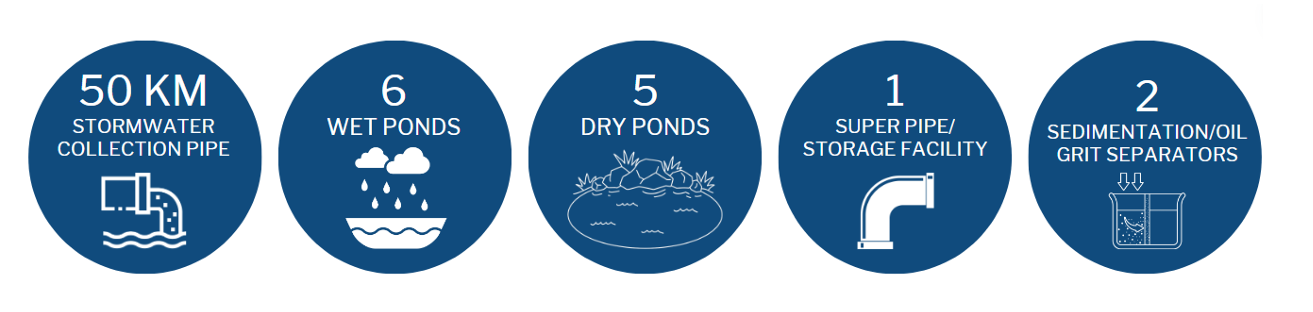
The Town of St. Marys stormwater management system is made up of many components and generally consists of the following:
What to expect during major weather events
St. Marys has seen a rise in severe and frequent wet weather events. During these storms, it is not uncommon for the amount of rainfall typically received in a month to occur over just a few hours.
During significant weather events, residents may notice:
- Yards may experience ponding
- Catchbasins will collect water and may temporarily pond as they drain
- Streams may flow through properties
- Roads may temporarily hold up to 30 cm of water before draining
This is normal during severe weather conditions. Town infrastructure including roads, yards, and drainage systems is designed to collect water and help prevent it from entering basements.
Common causes of yard flooding
It's typical to see some water accumulate on your property during rainfall or when snow is melting.
Common reasons for yard flooding include:
- Changes or additions to your property. Structures like pools, sheds, fences, raised garden beds, or walkways can alter the grade of your lot or block water flow.
- Compacted or poorly graded soil. Dense soils such as clay, or areas where the ground has settled, can prevent water from draining properly and lead to pooling.
- Frozen ground. When the soil is frozen, it can't absorb water even if temperatures start to rise in early spring.
- Heavy rainstorms. Lawns have a limited capacity to soak up water, so excessive rain can cause water to collect.
- Runoff from neighboring properties. Changes in landscaping or construction next door may channel additional water into your yard.
Maintaining catchbasins
Stormwater is directed into catchbasins. Dumping chemicals, oils, or waste into a catchbasin can damage our rivers and creeks. Remember, only rainwater should enter these drains.
Taking care of rear yard catchbasins
Homeowners are typically responsible for maintaining rear yard catchbasins located in their backyards. These catchbasins are usually found at the lowest point of a property and may collect water from multiple neighboring yards. To keep your rear yard catchbasin working correctly, regularly clear away grass, weeds, debris, and leaves from the cover, and make sure the area slopes toward the catchbasin. During heavy rainfall, street catchbasins can accumulate up to 0.3m of water, while rear yard catchbasins can hold up to 0.45m. After the storm passes, the water will gradually drain into the storm sewer.
What you can do
- If you have a catchbasin in your yard, make sure water can flow toward it and that it isn’t blocked.
- Never pour anything into a catchbasin.
- Don’t dispose of pet waste or yard waste in a catchbasin.
- Limit the use of fertilizers and pesticides on your lawn and garden.
- Recycle and properly dispose of hazardous materials like used oil, paint, paint thinners, and batteries.
- Choose eco-friendly alternatives to salt for melting ice and snow on your property.
- Do not release unwanted household fish, game fish, or aquarium pets into catchbasins or ponds.
- Only drain pools and hot tubs when they contain no chemicals or salt.
- Wash your car at a commercial car wash or on a grassy area of your property.
- Check your vehicle regularly to ensure it isn’t leaking fluids.
Stormwater reports
Contact Us
Town of St. Marys (general contact)
Town Hall: 175 Queen Street East
Mail: P.O Box 998
St. Marys, ON N4X 1B6